
Federal BOP Release Paths
The Bureau of Prisons holds people serving federal sentences. A person may leave BOP after sentence completion, a court-directed change, transfer, or another recorded event. The public locator can display “Released” and a date. That is evidence of departure from BOP custody, not proof that every legal restriction ended. Federal supervision, an unresolved state case, a county hold, or civil immigration custody may still apply.
An Edwards County arrest does not create federal prison status by itself. The case must enter federal jurisdiction and reach the custody stage being researched. The sentencing court supplies the judgment and legal disposition. BOP supplies sentenced-custody information. U.S. Marshals Service records or the responsible facility may address pretrial transport. These sources should not be blended into one generic jail record.
Search Federal Release Records
Use the official BOP inmate locator for a sentenced federal person. Search by BOP register number when known. The locator also accepts FBI, INS, and DCDC numbers. A name search can be narrowed with race, age, and sex. Compare all available identifiers before selecting a result, since a similar name is not enough to establish identity.
- Confirm that the known case is federal.
- Search by agency number before relying on a name.
- Compare the displayed identity fields.
- Copy the exact status and release date.
- Check the federal docket and any known receiving authority.
BOP states that locator coverage reaches federal inmates from 1982 to the present. Older federal prison records may require National Archives research. If the result says “Not in BOP custody,” do not rewrite that phrase as “released.” The person may be released, held before trial elsewhere, transferred, or outside the locator's coverage. For a county-only episode, use the Edwards County release search and records path.
Federal Release Record Contacts
The public BOP locator is the first access channel for a covered sentenced-prison record. When the exact conviction, sentence, amended judgment, or ordered supervision matters, use the federal court docket through PACER or contact the sentencing court clerk. A court judgment explains legal authority. The BOP record explains its own custody episode. Neither should be treated as a substitute for the other.
Federal Custody Channels
Sentenced prison custody: BOP Inmate Locator
Federal case disposition: PACER or sentencing court clerk
Pretrial custody or movement: U.S. Marshals Service or responsible detention facility
Older federal prison records: National Archives when applicable
The Marshals Service handles federal detainee movement and can use local or contract beds. It does not offer one public, real-time locator equal to BOP for every pretrial prisoner. If the person has not been federally sentenced, begin with the court and known detention agency instead of forcing the name into a sentenced BOP path.
Federal Released Result Fields
A covered BOP result may show name, register number, age, race, sex, location or “Released,” and a release date. Those fields are useful only within the stated federal episode. They do not search the Edwards sheriff roster, TDCJ, ICE, or a community-supervision record. Save the exact wording and access date rather than paraphrasing a limited result into a broad custody conclusion.
The official BOP locator screen shows the federal system's own search route and criteria.
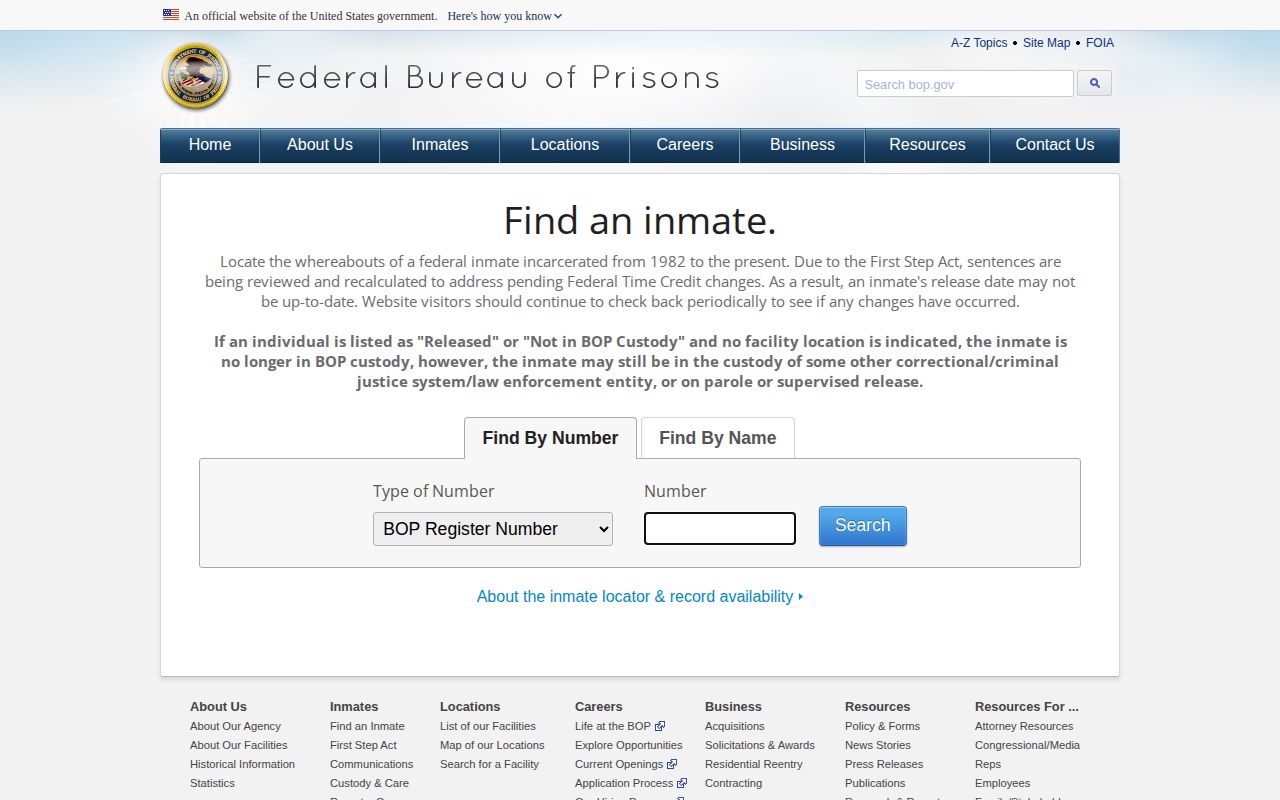
The screen supports a federal lookup, but the surrounding custody checks remain necessary for an Edwards County person.
Identity needs care. A register number is stronger than a name. Age and other displayed fields help separate people with similar names, but the sentencing docket can provide another cross-check. When the physical departure terms matter, seek BOP history and the federal judgment. A search-result line is not a full release certificate, and the date alone may not explain what followed.
Edwards to Federal Custody
If the Edwards County sheriff says that a federal authority assumed custody, describe the county event as an interagency transfer. Request the sheriff's movement log, receiving agency, destination, and departure time. A name leaving the manually dated Edwards roster does not establish community release. It only shows that the current page no longer displays the person.
Next identify the federal stage. BOP is appropriate for sentenced prison custody. USMS often controls pretrial detention and transport. The federal court can connect the transfer to a charging, detention, sentencing, or release order. Keep the county movement record paired with the federal source that accepts custody. This same case-and-custodian distinction matters when the local roster points to Briscoe, but a Texas state placement is not federal custody.
Federal Release Record Layers
Choose the record that answers the actual question. The Edwards sheriff can document departure from local custody. The federal court can show the legal order and sentence. USMS or a detention facility can address pretrial custody. BOP covers sentenced prison custody. A federal supervision record addresses obligations after prison, while ICE has its own civil system.
| Source | Safe conclusion |
|---|---|
| BOP “Released” | Departure from BOP on the displayed date |
| Not in BOP custody | No current BOP custody shown |
| Federal judgment | Sentence and legal disposition |
| USMS or detention facility | Pretrial location or movement |
| ICE ODLS or ERO | Eligible immigration detention information |
No single result answers every custody question. If records conflict, note each source's date and exact label. A dynamic locator may update after a static court filing, while a county roster may lag. Direct confirmation from the responsible agency is safer than selecting whichever page looks newest.
Verify a Federal Departure
Before reporting a release, confirm identity, register number if available, the sentenced or pretrial stage, exact status, and date. Read “Released” as a BOP fact. Then check the court docket and any known receiving authority. If a supervision term follows imprisonment, prison custody has ended but the federal sentence may still impose community obligations.
Use narrow language in the final account. “Not in BOP custody” does not identify why. “Released from BOP” does not resolve local, state, ICE, or supervision status. “Transferred” means custody continued with another authority. Those limits create a more accurate federal release record for a person connected to Edwards County.